Dual-voltage wording explained: what a listing can tell you about input, what only a manual and a qualified electrician can confirm. This guide uses exact Amazon listing records, not hands-on welding tests. Seller specifications illustrate the questions to ask; they do not establish measured weld quality, and nothing here replaces the machine manual or a licensed electrician for any supply, circuit or receptacle question.
Read the input-voltage statement literally
Listings describe input voltage in several ways: 110V only, 110V/220V, 120V/240V, or dual voltage with automatic detection. Each phrase describes the supply the machine is designed to accept. It does not describe your circuit, and it does not promise that the advertised maximum output is available on both inputs. The YESWELDER 135A record is a 110V unit with a stated 3/32-inch mild-steel capacity. The 205A record is dual voltage and ties its 200A output to 220V.
Keep the stated output for each input in separate columns when the listing supplies both. Where it supplies only the maximum, mark the 110V output as unknown rather than assuming it. Our amperage guide covers the same distinction for thickness claims.
Automatic detection is a feature, not a supply assessment
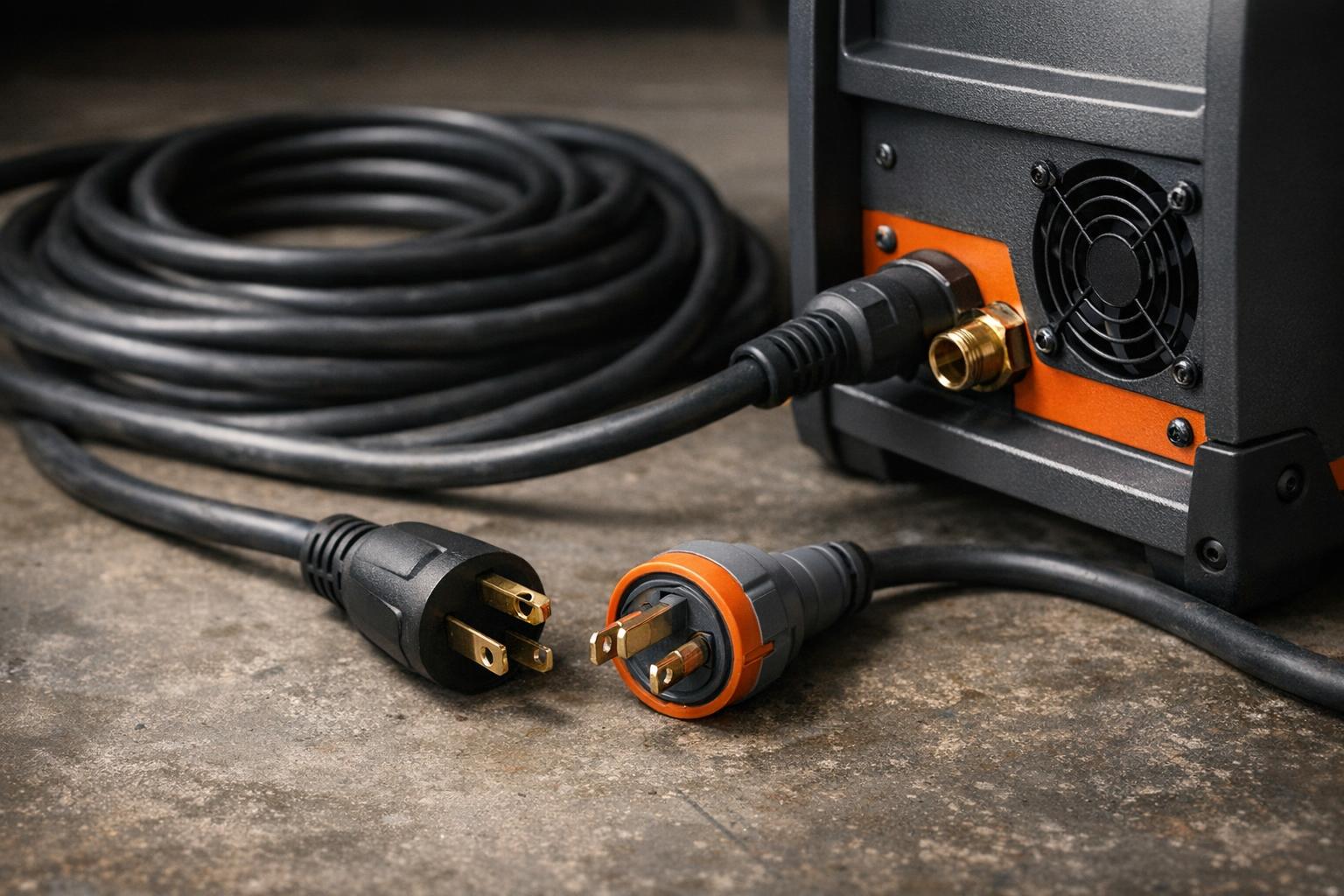
Several records describe auto-sensing dual-voltage input. The Weldpro 200A AC/DC TIG record states automatic dual-voltage detection and switching. That tells you the machine identifies its supply; it says nothing about whether a specific receptacle, breaker or cord is suitable. Adapters, extension cords and generator use are covered by the manufacturer manual and local electrical rules, and this site does not provide instructions for any of them.
If you do not have a suitable 220V or 240V circuit, treat installing one as a job for a qualified electrician, priced alongside the machine. A listing that says it plugs into household power is describing the plug configuration the seller chose, not a statement about your wiring.
Match the plug and cord description to the manual
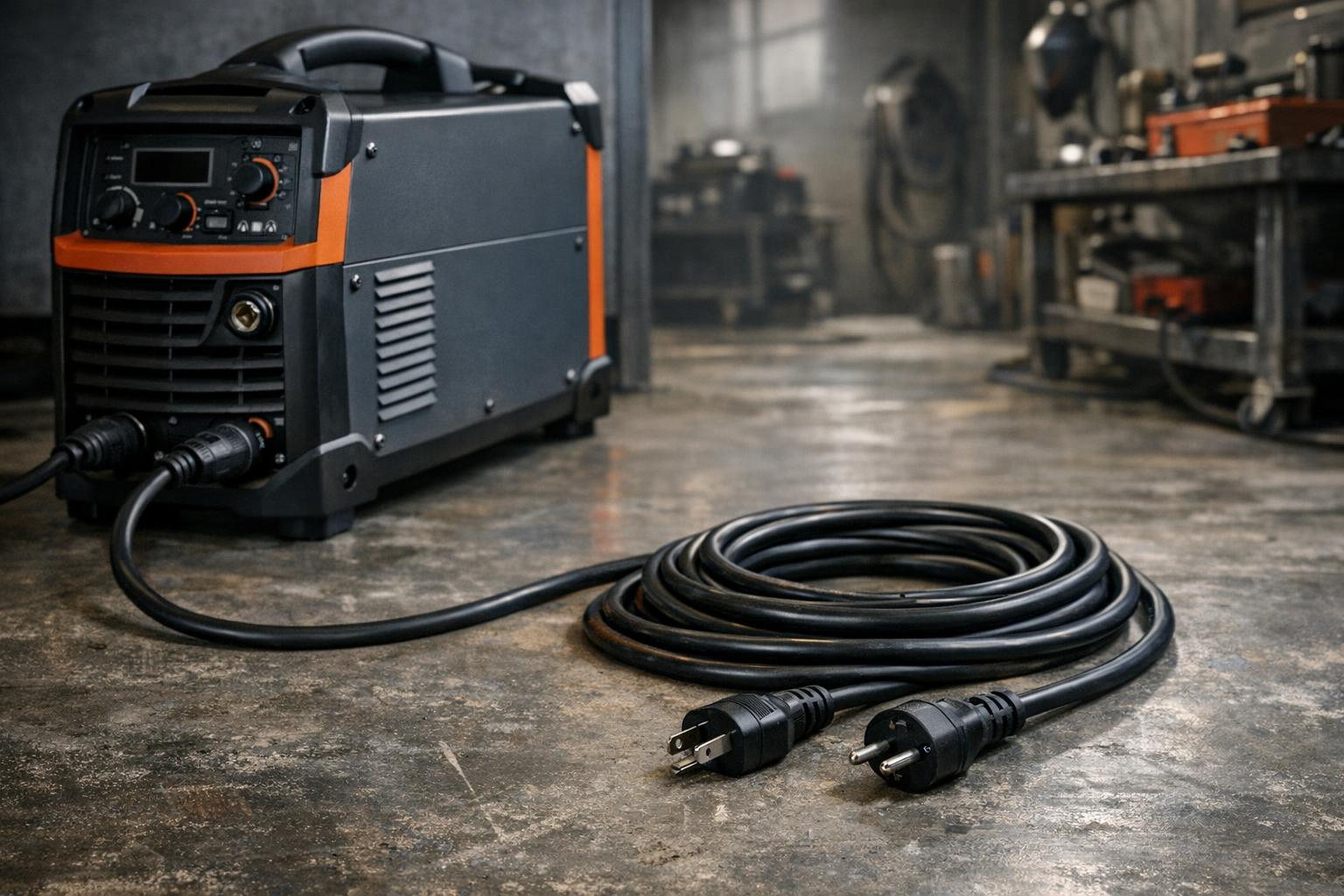
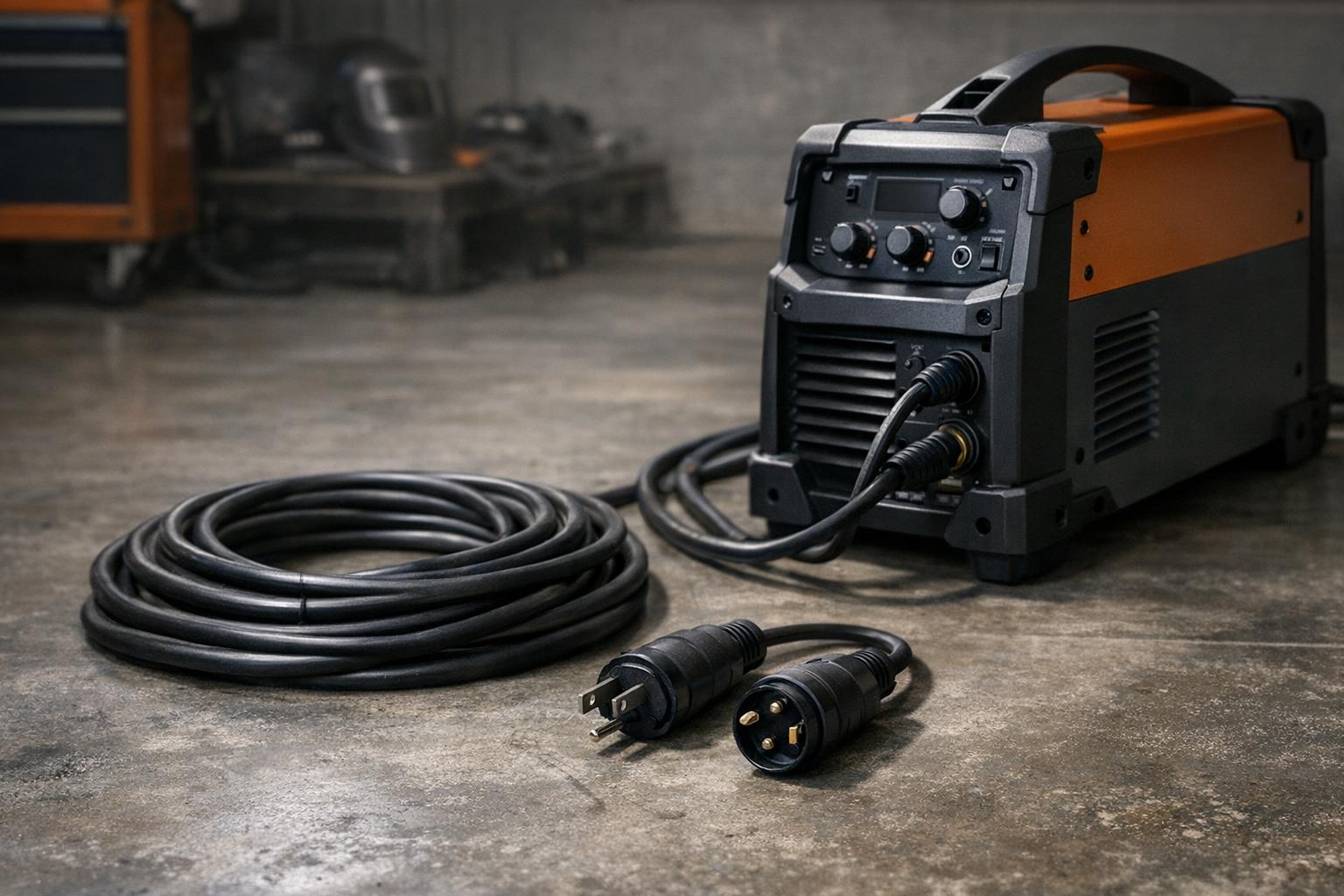
Some records mention a multi-voltage plug or specific cord arrangement. The Lincoln Power MIG 220 AC/DC record states 120V and 230V inputs. Miller records in our catalog describe a multi-voltage plug for 120V and 240V receptacles. Those statements identify what is supplied; verify the exact receptacle type and any adapter in the manual and confirm compatibility with your installation before purchase.
Do not modify a plug, cord or receptacle to make a machine fit. Where a listing is silent about the plug, leave the column blank and ask the manufacturer. The safety guide lists the documents to read before first use.
Consider output expectations on the lower input
A dual-voltage machine may deliver noticeably less output on 110V than on 220V, and the listing may state only the higher figure. Decide which input you will actually use most of the time and compare candidates on the output and duty cycle for that input. If a listing does not give the lower-input output, that is a documentation gap to resolve with the manufacturer, not a reason to assume the headline figure applies.
The duty cycle guide explains why a percentage without an amperage basis is incomplete; the same caution applies to a percentage without an input voltage. Our planner does not adjust for input voltage, because no listing in our catalog provides a documented basis for that adjustment.
Make the supply part of the purchase decision
Before ordering, write down the circuit you will use, the receptacle you have, and whether the manual for the exact model accepts that arrangement. If any of those is uncertain, resolve it with the manual and a qualified electrician first. A machine chosen for its 220V output that ends up running on a 110V circuit answers a different question from the one you asked.
Our multiprocess comparison shows input voltage as captured from each listing. It does not rank machines by supply convenience and it does not assess your installation. Use the methodology to understand what the editorial score includes, then confirm supply, plug and output on the exact manual.
Portable generators raise a further question. Some Miller records mention generator compatibility with a stated wattage; most listings say nothing. Generator use involves the machine's input requirements, the generator's output quality and the manual's explicit permissions. Do not assume a dual-voltage machine tolerates any generator, and do not size a generator from a listing bullet. Treat it as a manual and manufacturer question, with the same electrician involvement as a fixed circuit.
When you record input voltage in your shortlist, write the exact phrase from the listing next to the figures. The difference between 220V and 240V, or between a listing that says household outlet and one that names a receptacle type, is the difference between a marketing phrase and a specification. Keeping the wording visible lets a later reader see what was actually stated and what was inferred.
Sources and further reading
- YESWELDER 135A MIG Welder, 110V Flux Core Gasless MIG/Lift TIG/Stick 3-in-1
- YESWELDER 205A MIG Welder, 110V/220V 5-In-1 MIG/Flux Core MIG/Spool Gun MIG/Lift TIG/Stick
- Weldpro 200A AC/DC TIG Welder with Pulse, 110V/220V Dual Voltage Aluminum TIG Welder, AC TIG/DC TIG/AC PULSE TIG/DC PULSE TIG/Stick 5 in 1 Multiprocess Welding Machine with TIG Torch & Foot Pedal
- POWER MIG 220 AC/DC multi-process welder