Gas MIG, gasless flux-core and spool-gun aluminum MIG are three different setups; learn what each mode requires and how listings describe them. This guide uses exact Amazon listing records, not hands-on welding tests. Seller specifications illustrate the questions to ask; they do not establish measured weld quality, and nothing here replaces the machine manual or a licensed electrician for any supply, circuit or receptacle question.
Three modes, three sets of equipment
Listings often count gas MIG, gasless flux-core MIG and spool-gun MIG as three of a machine's five or six modes. Each needs different equipment. Gas MIG needs shielding gas, a regulator and solid wire; flux-core uses self-shielded wire and typically reversed polarity; spool-gun MIG uses a separate gun that carries its own small spool. The YESWELDER 205A record names all three and notes that the spool gun is not included.
Before comparing candidates, decide which of the three you will actually use. A machine advertised as six-in-one that ships without a spool gun or regulator is a two-mode purchase until those items are added. Our buying checklist starts from that included-items question.
Flux-core is documented by the wire, not only the machine
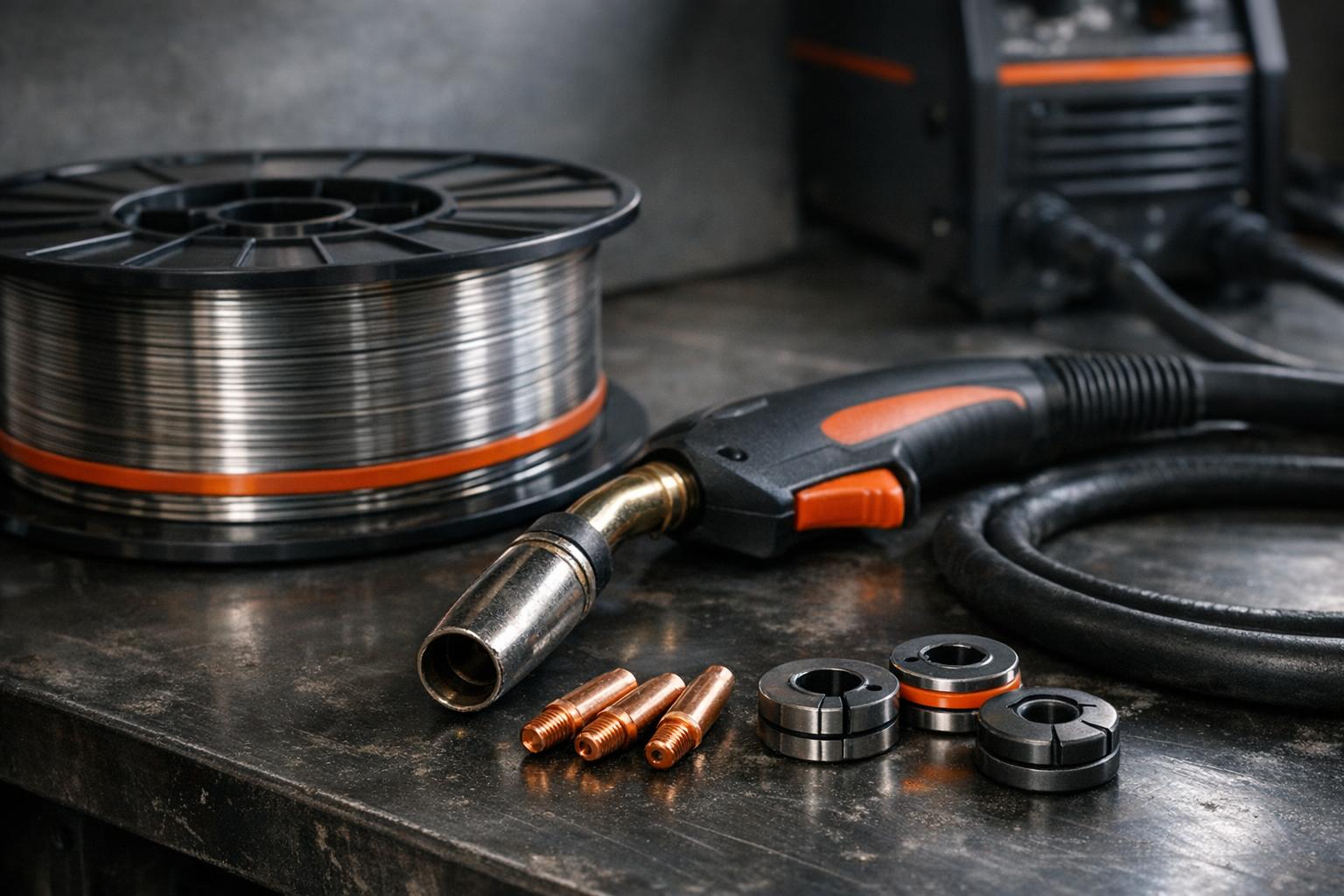
Gasless operation depends on self-shielded wire. The YESWELDER E71T-GS record describes AWS E71T-GS self-shielded flux-cored wire for mild steel with all-position capability. The machine listing tells you the mode exists; the wire listing tells you the classification and diameters available. Keep both in the shortlist and confirm the machine's supported wire diameters and polarity change in its manual.
Do not assume a flux-core wire from one brand is suitable for another machine simply because the diameter matches. The consumables guide explains how to match wire, drive roll and contact tip to the exact model.
Spool gun connectors are model-specific
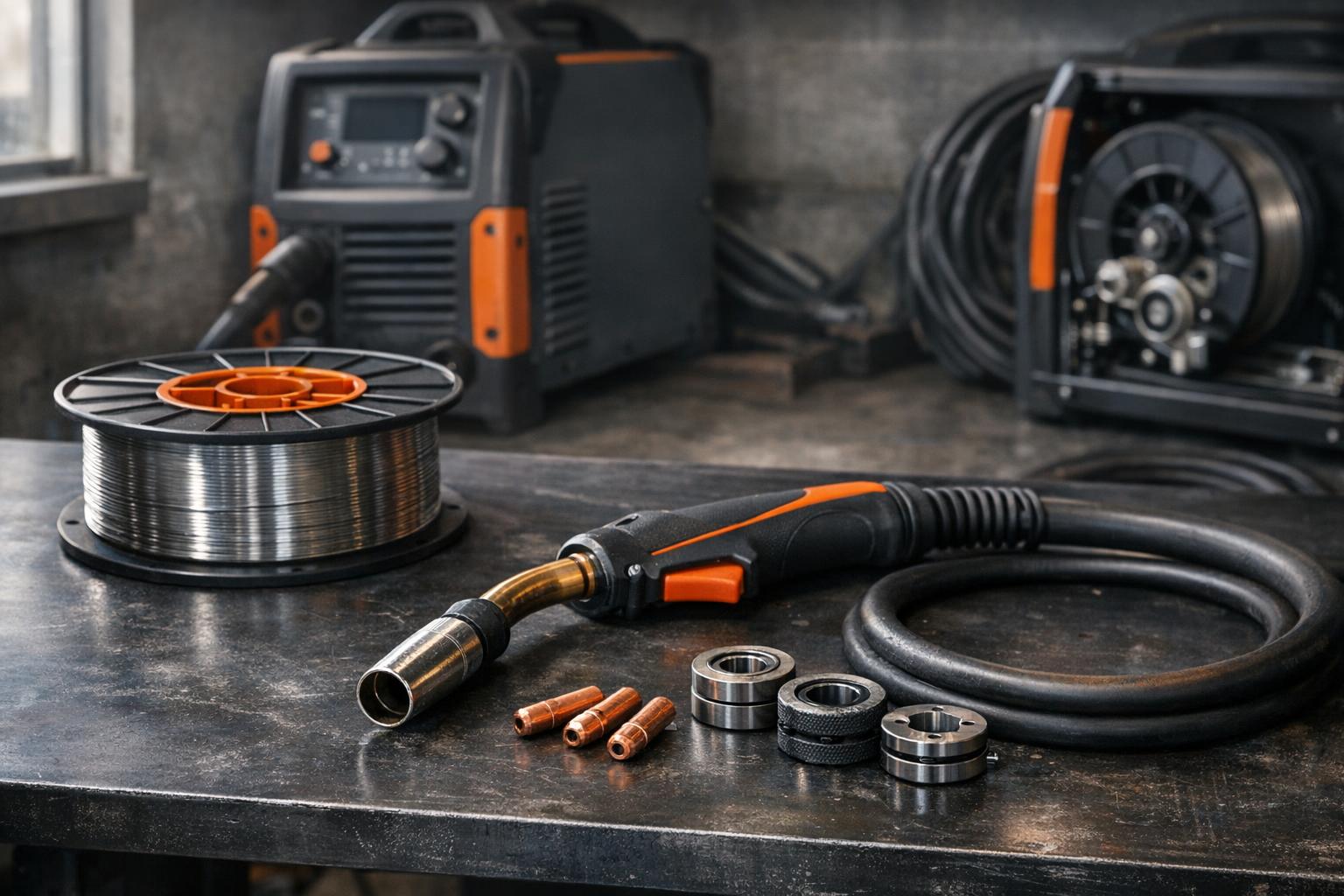
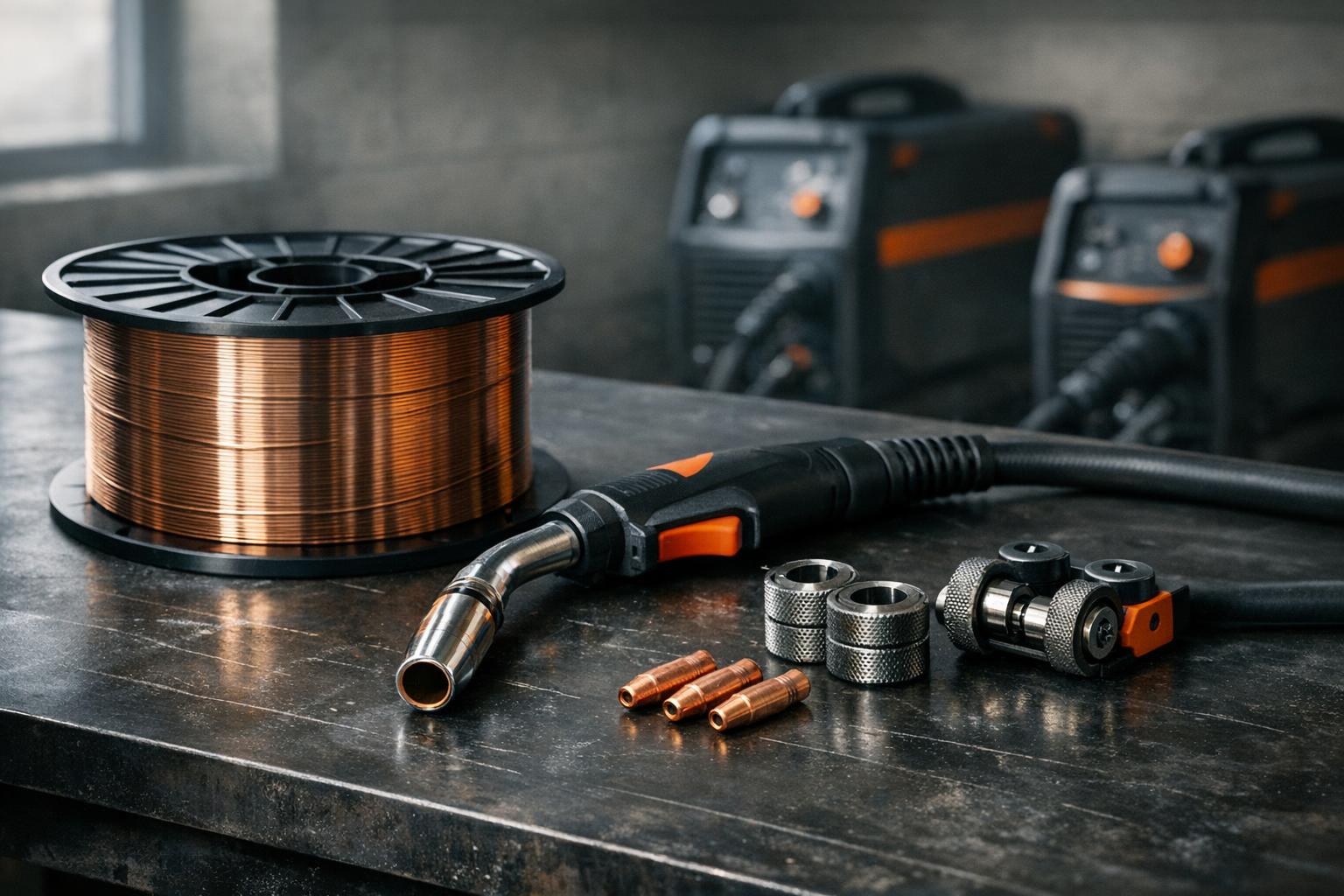
The ARCCAPTAIN MIG200 record describes an optional spool-gun connector and states that the spool gun is not included. The BILT HARD 250A record says the machine is spool-gun compatible, with the gun sold separately. The connector type, pin count and control signals differ between brands, so a spool gun must be confirmed for the exact model in the manual or the manufacturer's accessory list.
Treat the spool gun as a separate line in the purchase price and check its own stated wire diameters. A listing that says compatible without naming the part is a question to ask, not a confirmation.
Synergic and manual modes describe controls, not results
Many records describe synergic control that matches voltage to wire speed and a manual mode that lets you set both. The YESWELDER 205A record states a wire-speed range of 58 to 858 inches per minute with automatic voltage matching. The BILT HARD record describes synergic adjustment based on amperage with burn-back and inductance settings. These are documented control features; they do not establish that either machine produces better welds.
Write down the named controls and check the manual for their ranges. Our amperage guide explains why a stated wire-speed range and a stated maximum output do not by themselves predict a weld on a specific thickness.
Choose the modes you will use and price the rest
For each candidate, list which of the three wire modes are usable out of the box and which need a spool gun, regulator, gas cylinder or different drive rolls. Add those costs and check consumable availability for the exact torch. A cheaper machine that includes what you need may be the better purchase than a higher-mode-count listing that requires several extras.
Our multiprocess comparison presents captured review evidence and stated specifications under the methodology; it does not reward mode counts. The duty cycle guide covers the remaining column that decides how long any of these modes can run.
Spot and pulse functions appear in the same mode lists. The BILT HARD record includes spot welding in its six functions; the ARCCAPTAIN record names spot welding and 2T/4T trigger modes; other catalog records advertise pulsed or double-pulsed MIG. These are documented control modes and should be recorded as such. They do not establish a measured result on any material, and their usefulness depends on the settings the manual actually exposes.
Wire compartment size and spool capacity are practical columns that listings rarely state. A machine that accepts only small spools changes the running cost and the frequency of changes, and a spool gun typically carries a much smaller spool than the main compartment. Where the listing is silent, check the manual for the supported spool diameters and weights before assuming a ten-pound spool fits.
Gas-shielded MIG also requires a cylinder, a regulator or flowmeter, and the right gas mixture for the wire. Our consumables guide covers fittings, but the cylinder itself comes from a gas supplier under its own terms. Price the cylinder arrangement and a first fill alongside the machine so the comparison between a gasless-only setup and a full gas MIG setup reflects the real outlay.
Sources and further reading
- YESWELDER 205A MIG Welder, 110V/220V 5-In-1 MIG/Flux Core MIG/Spool Gun MIG/Lift TIG/Stick
- ARCCAPTAIN 200A MIG Welder 110V 220V 6 in 1 Aluminum Welding Machine MIG200
- BILT HARD Aluminum 250A MIG Welder, Gas MIG/Flux Core MIG/Lift TIG/Stick/Spot Welding/Spool Gun Compatible 6-in-1 Welding Machine, 110V/220V Multi-Process Welder w/LED Display, IGBT Inverter
- YESWELDER Gasless Flux Core MIG Wire, E71T-GS Mild Carbon Steel