AC output, pulse control, foot pedal, torch type and duty cycle: the columns that qualify a TIG machine for aluminum, drawn from exact listings. This guide uses exact Amazon listing records, not hands-on welding tests. Seller specifications illustrate the questions to ask; they do not establish measured weld quality, and nothing here replaces the machine manual or a licensed electrician for any supply, circuit or receptacle question.
Why AC output is the qualifying statement
Aluminum TIG welding conventionally relies on alternating current, so the first thing to verify in a listing is an explicit AC TIG statement. A DC-only TIG or lift-TIG mode on a multiprocess machine does not meet that requirement. Our AC/DC TIG comparison includes only machines whose exact listing states AC output, and it does not infer AC capability from a brand or series name.
The Weldpro 200A record lists high-frequency AC TIG, DC TIG, AC pulse, DC pulse and stick. The YESWELDER TIG-200P record states AC TIG, DC TIG, AC and DC pulse, spot and stick. The Miller Multimatic 220 AC/DC record is a multiprocess unit that explicitly adds AC/DC TIG. Read the mode list literally.
Record AC balance, frequency and pulse as stated
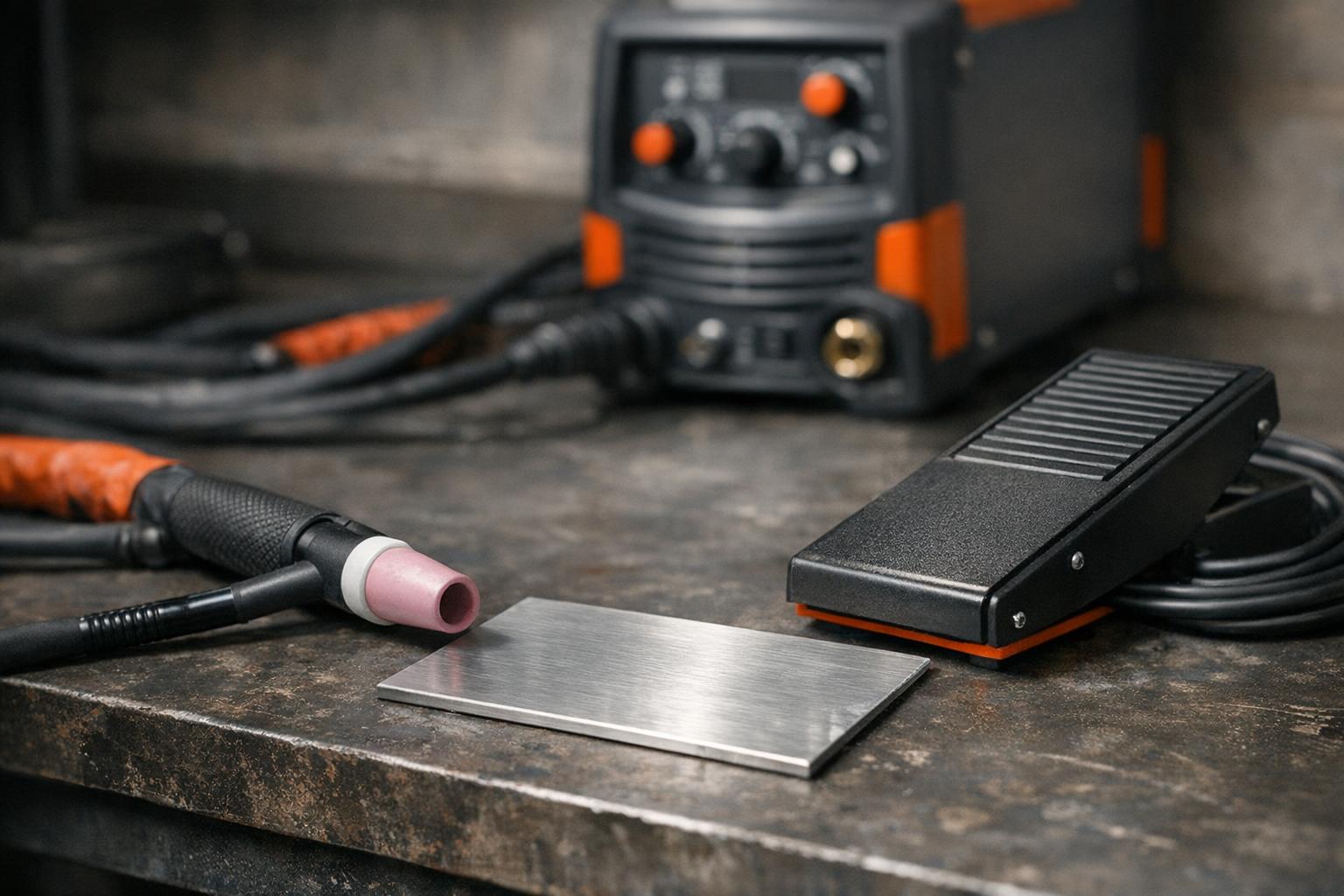
Listings for aluminum-capable machines often advertise adjustable AC balance, AC frequency and pulse parameters. The Weldpro record states fully adjustable balance, frequency and pulse with a 0.5 to 200Hz pulse range and upslope/downslope settings. The Sunstac 250A record lists high-frequency AC and DC, pulsed AC and DC, AC and DC spot, and stick. These describe controls the seller says exist, not the results you will get.
Write down each parameter the listing names and check the manual for its range and meaning. A named adjustment is a reason to read the manual, not proof of superior aluminum welds. Our amperage guide applies the same discipline to the thickness figures these records quote.
Check the foot pedal and torch in the package line
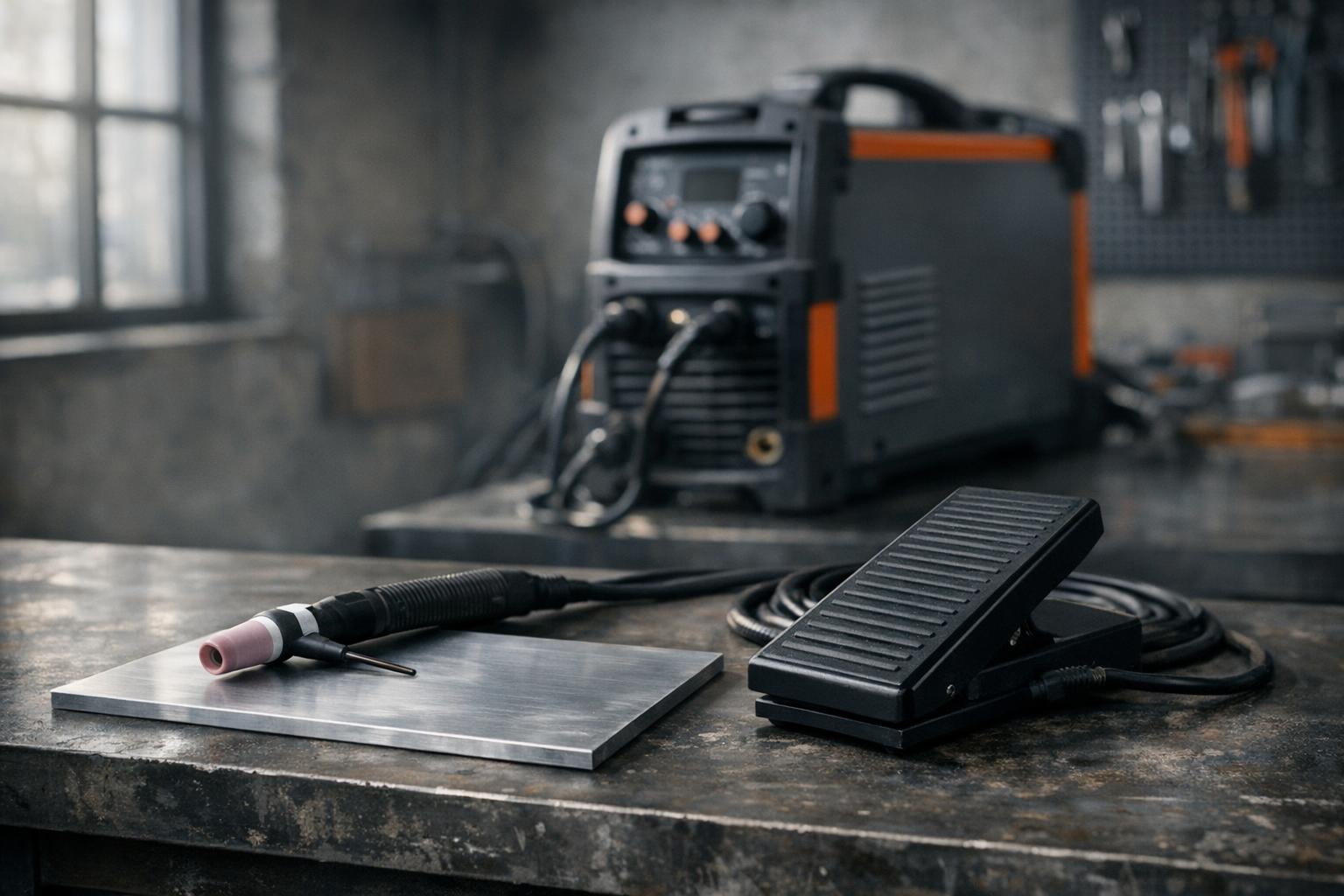
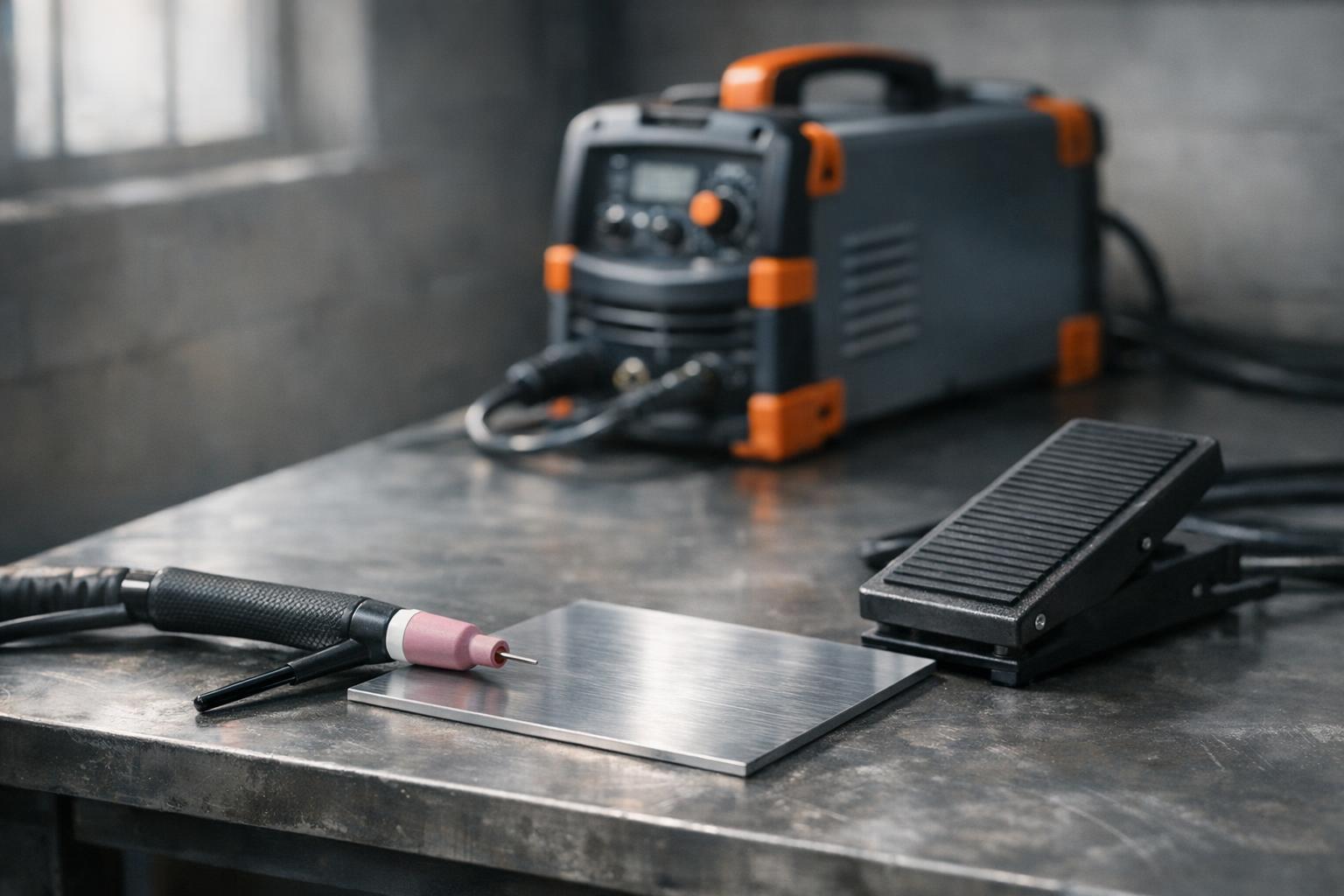
Amperage control while welding usually comes from a foot pedal or torch control, and its inclusion varies. The Weldpro record states an included foot pedal; the Sunstac title names foot-pedal control. Other AC/DC listings in our catalog describe a pedal as optional or say nothing. Record inclusion separately from capability, and check the connector type in the manual before buying a third-party pedal.
The torch type, cable length and cooling method also belong in the shortlist. Where the listing is silent, leave the cell blank. See the consumables guide for tungsten, cup and collet compatibility, which depends on the exact torch supplied rather than the machine brand.
Read amperage, duty cycle and input together
A 200A or 250A AC/DC listing usually attaches its output to 220V input and may not state the 110V output. The YESWELDER record describes auto-sensing 110V/220V input; the Weldpro record states automatic dual-voltage switching. Neither gives a duty cycle at a stated current in the captured text, so we show no duty cycle for them. The Weldpro listing's 40% figure is displayed only because the listing states it.
Use the duty cycle guide and the planner to convert a stated percentage into arc-on minutes, and read the input-voltage guide before assuming full output on a household circuit. The manual and a qualified electrician decide the supply question.
Build the aluminum shortlist from documented columns
For each exact model, record: explicit AC TIG statement, AC balance and frequency ranges, pulse range, included pedal and torch, maximum output per input voltage, duty cycle with amperage basis, and weight. Mark unknowns as unknown. Reject a candidate whose listing does not state AC output, regardless of its review average, because the qualifying requirement is missing.
Our comparison blends captured review evidence with documentation completeness under the methodology; it does not measure arc starts, cleaning action or bead quality. Use it to find candidates whose listings state the right things, then verify each column in the manual.
Multiprocess machines with AC TIG deserve a separate note. The Miller Multimatic 220 AC/DC and Lincoln Power MIG 220 AC/DC records both describe AC/DC TIG within a MIG and stick platform. They qualify for the AC/DC TIG comparison only because their exact listings state AC output; a sibling model that states DC TIG only does not. If you want one machine for both steel wire welding and aluminum TIG, check that the specific listing you are buying carries the AC statement, not the series page.
Lastly, weight and cooling method belong in the shortlist. The YESWELDER record states 16.47 pounds; larger AC/DC units and multiprocess platforms weigh several times that. Air-cooled torches limit sustained amperage differently from water-cooled ones, and the manual states which torch is supplied. Record both as listing figures and confirm them in the documentation before deciding between a bench machine and a portable one.
Sources and further reading
- Weldpro 200A AC/DC TIG Welder with Pulse, 110V/220V Dual Voltage Aluminum TIG Welder, AC TIG/DC TIG/AC PULSE TIG/DC PULSE TIG/Stick 5 in 1 Multiprocess Welding Machine with TIG Torch & Foot Pedal
- Sunstac 250A Aluminum TIG Welder with Pulse ACDC Foot Pedal Control
- YESWELDER 200A AC/DC Aluminum Tig Welder TIG-200P ACDC TIG Welding Machine
- Miller 907757 Multimatic® 220 AC/DC Multiprocess Welder, 120V/240V