MIG, TIG and stick are the three arc welding processes most home and farm buyers compare, and a multiprocess welder promises all three in one box. Before deciding whether that versatility is worth paying for, it helps to know what each process actually does well and where it struggles. This comparison uses Miller Electric’s published process guides and the ANSI Z49.1 safety standard’s lens shade table, then maps the differences to the questions to ask of an exact listing. This is buyer and orientation information, not an operating procedure: read the owner’s manual of the exact machine, follow ANSI Z49.1 and get hands-on instruction before striking an arc.
MIG vs TIG vs stick: the short answer
Short answer MIG is the easiest of the three to learn and handles thin or thick steel, stainless and aluminum with clean welds; TIG gives the most control on thin metals and aluminum but is slower and harder to master; stick is the most economical, works outdoors and on rusty or dirty metal, but is harder to learn and needs slag cleanup. That summary follows Miller Electric’s first-welder guide.
Miller frames the choice the same way: “no single process is suitable for all applications,” so the right process depends on your skills, materials and where you weld. A multiprocess machine lets you switch between processes, and Miller describes that flexibility as the main reason to choose one.
- MIG (GMAW): wire fed automatically; easy to learn; little cleanup (Miller).
- TIG (GTAW): non-consumable tungsten electrode, usually argon shielding; precise, slower (Miller).
- Stick (SMAW): coated electrode; economical; tolerant of wind and dirty metal; spatter and cleanup (Miller).
- Flux-cored (FCAW): wire-feed like MIG but self-shielded versions need no gas (Miller).
How each process works
Miller’s fundamentals article defines arc welding as any process that uses an electric arc to melt the base metal at the joint, “often with a filler material,” and lists MIG (GMAW), TIG (GTAW), stick (SMAW) and flux-cored (FCAW) as members of the family. The differences lie in the electrode and in how the weld is shielded from the air.
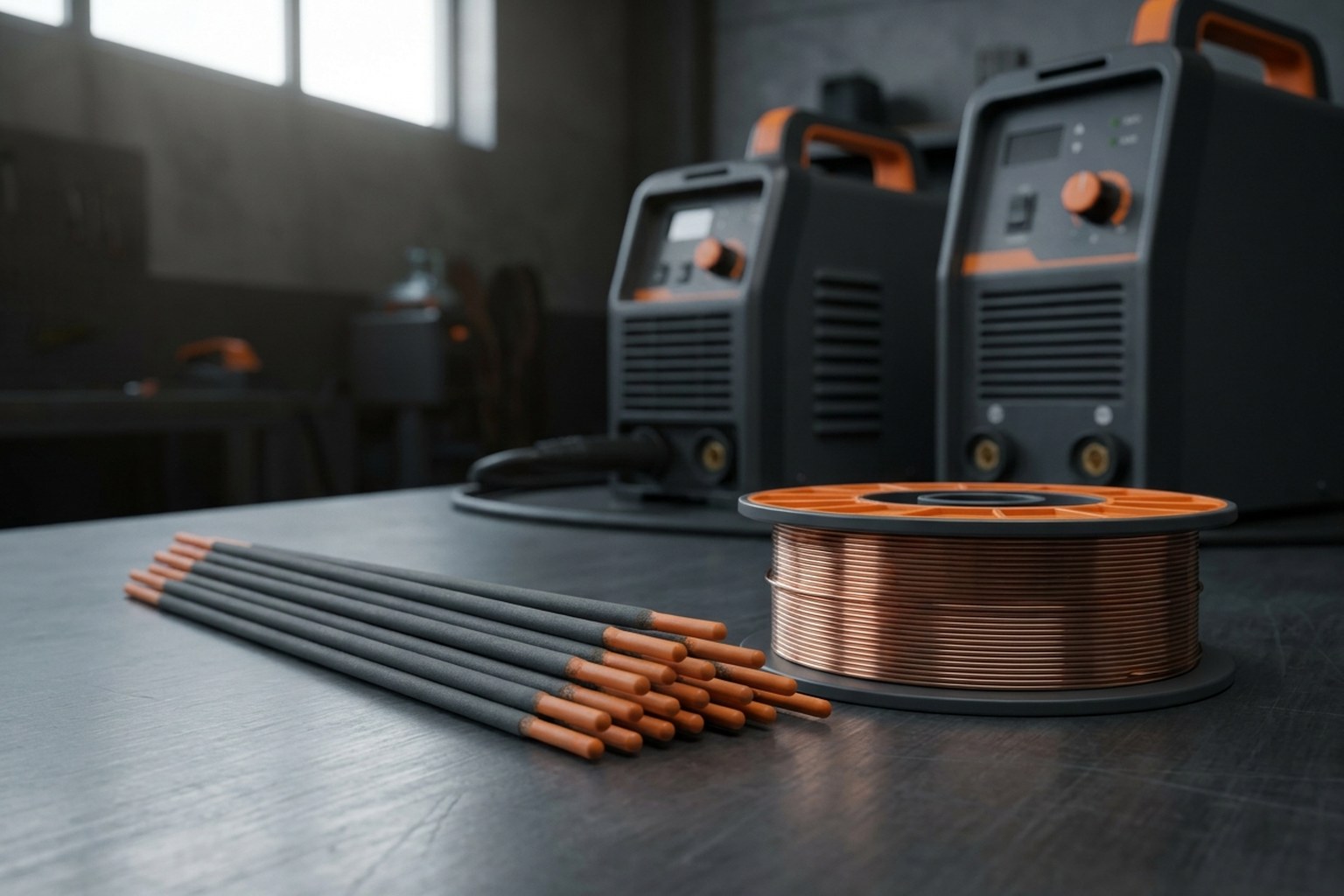
In MIG, a wire electrode on a spool is “fed automatically at a constant pre-selected speed.” In TIG, a non-consumable tungsten electrode produces the arc, shielding gas (usually argon) protects the weld area, and filler metal is added to the puddle when needed. In stick, a flux-covered electrode carries the current and its coating shields the weld. Self-shielded flux-cored wire does the same job inside a wire-feed process, so “self-shielded FCAW does not require shielding gas.”
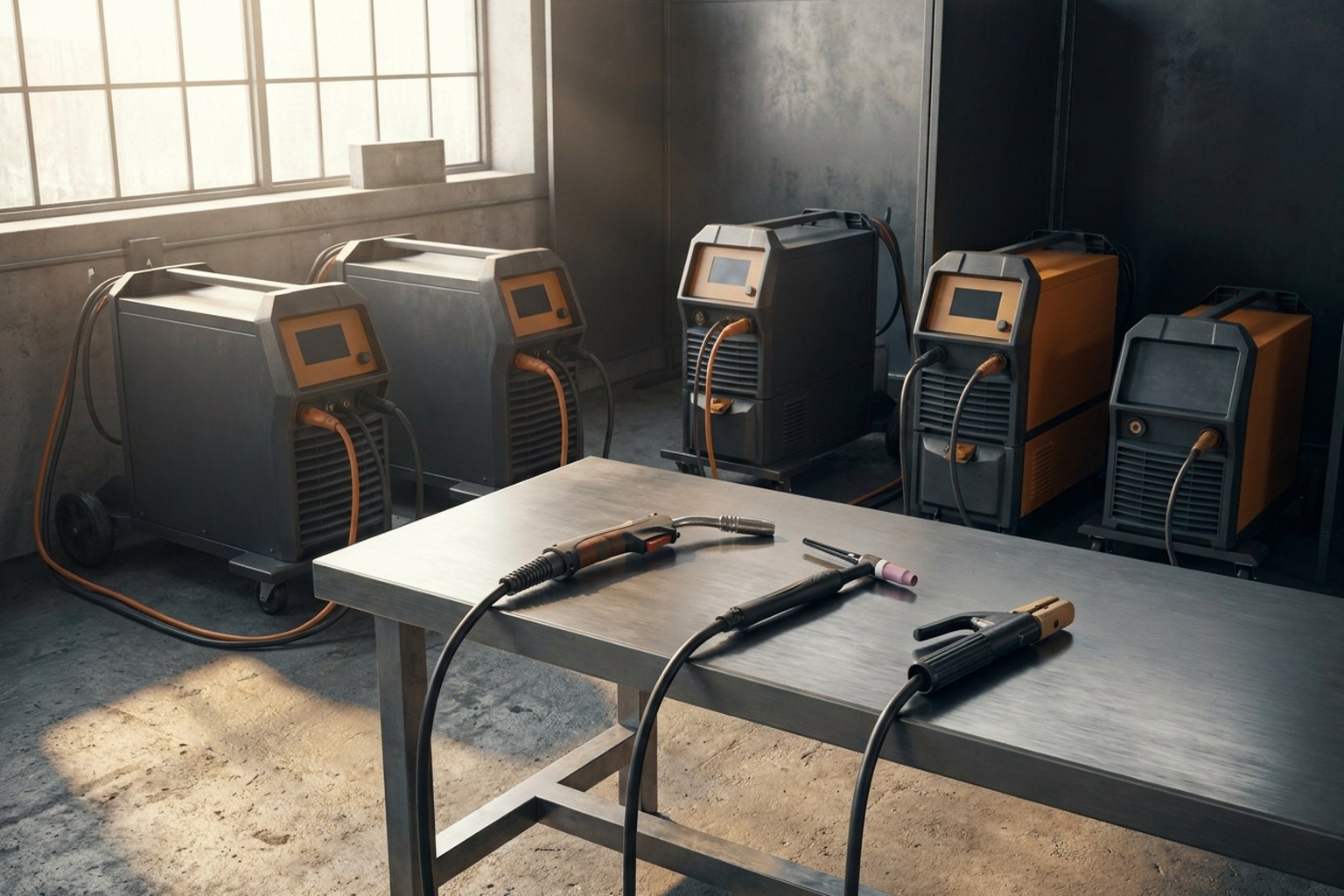
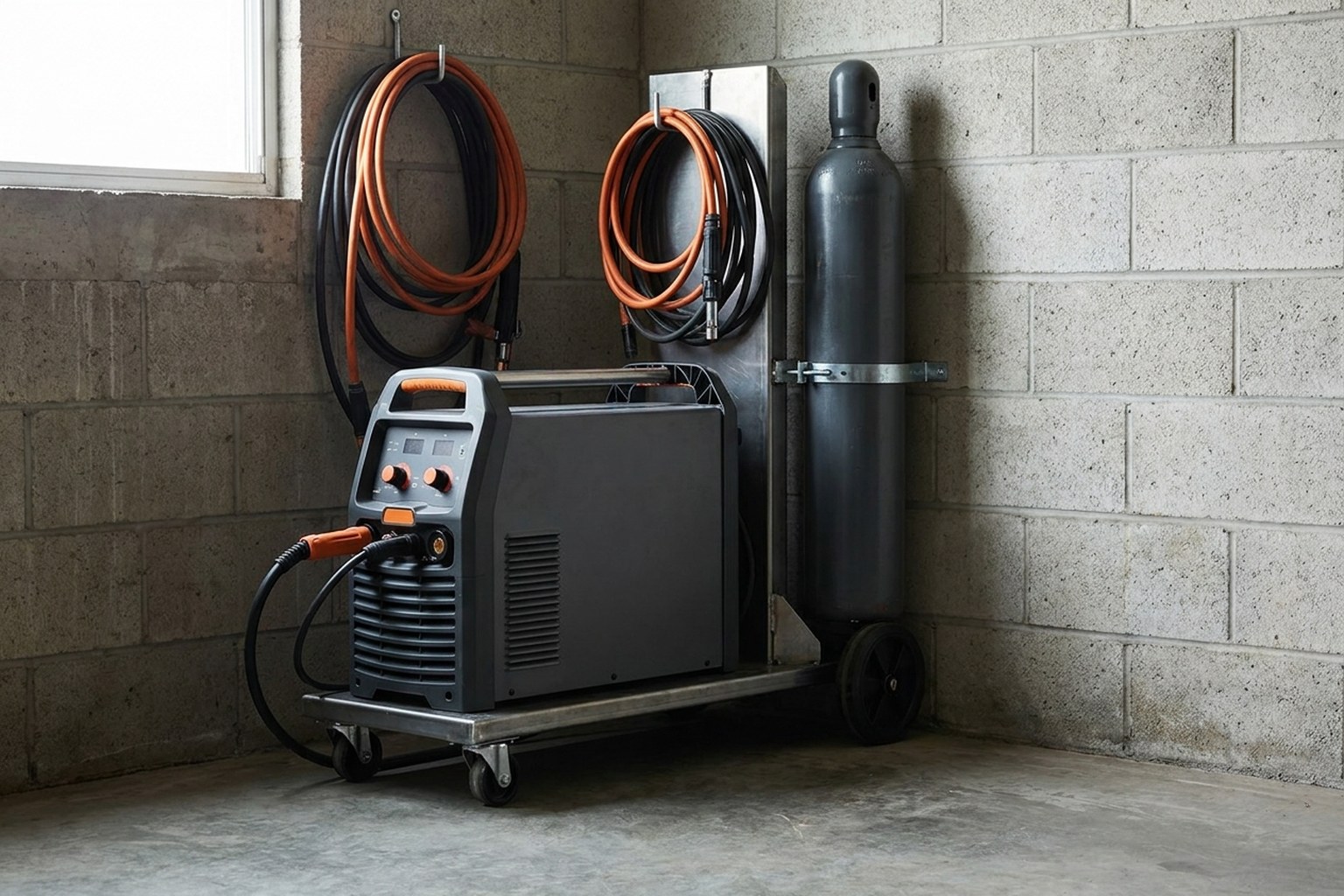
Those differences explain the equipment lists in listings: a MIG gun and gas regulator, a TIG torch and often a foot pedal, a stick electrode holder. Our guide to choosing a multiprocess welder shows how to separate the process list from the equipment that actually ships in the box.
Side-by-side comparison
| Question | MIG (GMAW) | TIG (GTAW) | Stick (SMAW) |
|---|---|---|---|
| Electrode | Wire on a spool, fed automatically | Non-consumable tungsten | Flux-covered electrode (rod) |
| Shielding | Shielding gas (flux-cored wire variant needs none) | Shielding gas, usually argon | Electrode coating |
| Ease of learning | Easy to learn | More complex and difficult to master | More difficult to learn; striking and holding an arc |
| Speed | Fast | Significantly slower | Frequent rod changes |
| Metals named | Steel, aluminum, stainless steel | Thin alloy steel, stainless, aluminum, magnesium, copper alloys | Most alloys or joints |
| Thickness notes | Thin or thick metals | Commonly thin sections | No thinner than 18 gauge |
| Outdoors / dirty metal | Gas MIG needs shelter from wind; flux-core suits outdoors | Indoor, clean metal | Indoors or outdoors; rusty or dirty metal |
| Cleanup | Little need for cleaning | Clean welds | Spatter; finished welds must be cleaned |
Miller’s guidance for outdoor farm and ranch jobs is specific: “stick welding or self-shielded flux-cored welding are ideal because they do not require a shielding gas.” For thin aluminum and stainless where appearance matters, TIG is the process Miller associates with the most arc control. For quick, clean welds on common shop steel, MIG is the usual starting point.
Which process should a beginner learn first?
Miller calls MIG “an easy process to learn” that “can be used on thin or thick metals,” and says it has been the most popular welding process for decades for professionals and hobbyists. Stick, by contrast, is “more difficult to learn and use, particularly the ability to strike and maintain an arc,” and TIG is “comparatively more complex and difficult to master.”
- Start with MIG: when most projects are clean steel in a garage (Miller).
- Add flux-core or stick: when work moves outdoors or onto rusty metal (Miller).
- Add TIG: when thin stainless or aluminum and bead appearance matter (Miller).
- Check the duty cycle: at the amperage you will use; see welder duty cycle explained.
Our safety and PPE guide covers what to prepare before a first session. If you already know you will only ever run wire, a dedicated machine may be simpler; multiprocess vs dedicated MIG weighs that trade-off.
Lens shade and safety differ by process
The ANSI Z49.1 standard reproduces the AWS F2.2 lens shade guide, and the minimum protective shade depends on the process and the current. The figures below are taken from that table; Z49.1 adds that shade numbers are given as a guide and suggests starting with a shade too dark to see the weld zone, then going lighter without going below the minimum.
| Process | Arc current | Minimum shade | Suggested comfort shade |
|---|---|---|---|
| Stick (SMAW) | 60–160 A | 8 | 10 |
| MIG (GMAW) / flux-cored (FCAW) | 60–160 A | 10 | 11 |
| TIG (GTAW) | 50–150 A | 8 | 12 |
Fire prevention applies to all three processes. OSHA 29 CFR 1910.252 says that, where practicable, “all combustibles shall be relocated at least 35 feet (10.7 m) from the work site.” Helmets, gloves and ventilation are covered in welding machine safety and PPE basics.
Matching a process mix to a multiprocess listing
Once you know which processes you will actually use, read a listing for proof that the machine supports them with the equipment you need. A “3-in-1” label does not tell you whether a TIG torch, gas regulator or foot pedal is included, and lift-TIG is not AC TIG for aluminum.
- MIG with gas: regulator and gas hose named, plus wire diameters supported.
- TIG: torch type, lift-start or HF start, and whether AC output is stated (AC/DC TIG listings).
- Stick: electrode holder included and the amperage range stated.
- Input: stated voltages; a 240V circuit should be assessed by a licensed electrician.
The best multiprocess welders ranking compares complete machines whose exact listings state MIG, TIG and stick modes. This is buyer and orientation information, not an operating procedure: read the owner’s manual of the exact machine, follow ANSI Z49.1 and get hands-on instruction before striking an arc.
Sources and further reading
- Miller Electric: Buying Your First Welder — A Practical Guide for Do-It-Yourselfers
- Miller Electric: The Fundamentals of Welding — Process, Equipment and Applications
- Miller Electric: MIG Welding Tips and Techniques for Beginners
- ANSI Z49.1:2021 Safety in Welding, Cutting, and Allied Processes (AWS free download, PDF)
- OSHA 29 CFR 1910.252: Welding, Cutting and Brazing — General Requirements